
2,000-year-old Roman millstone found with massive penis engraved on it
2,000-year-old Roman millstone found with massive penis engraved on it
The large penis rock was one of several interesting things found by archaeologists working on the A14 project, with others including woolly mammoth tusks and a woolly rhino horn.
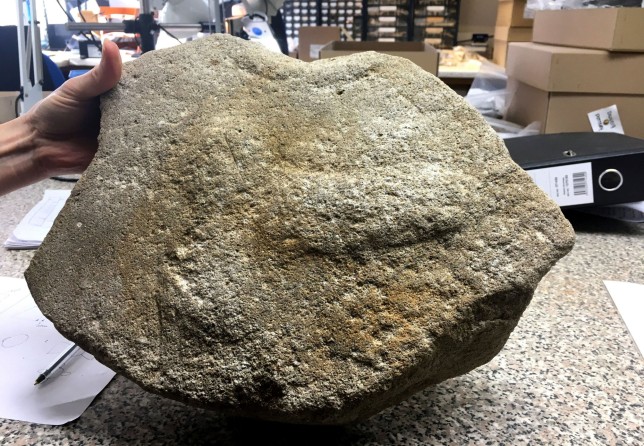
A large engraved penis has been found by archaeologists working on an A road upgrade.
The ancient relic engraved was dug up during the A14 upgrade project.
The archaeological team working on Britain’s biggest road scheme hauled out what at first appeared to be a simple millstone, Cambridge News reported.
“The phallus was seen as an important image of strength and virility in the Roman world,” said Steve Sherlock, Highways England’s Archaeology Lead for the A14.
On closer inspection, they realised the 2,000-year-old piece of rock also had a penis carved into it.
YOU MAY ALSO LIKE: Ancient humans in Europe may have stolen food from wild hunting dogs
He added that Roman fighters would often wear good-luck charms engraved with penises before entering battle.
The millstone, traditionally used for grinding grains, was recently pieced together by archaeologists MOLA Headland Infrastructure.
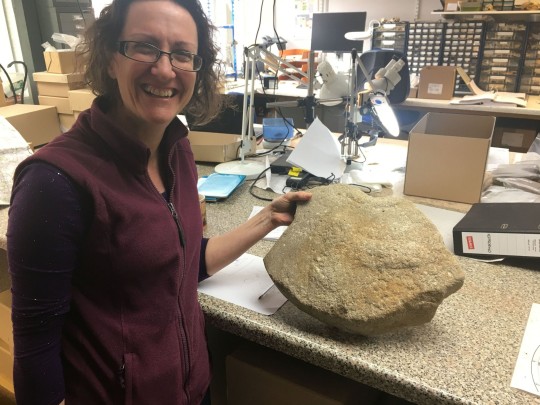
Decorated querns, which are stone tools designed to hand-grind materials, are extremely rare.
Only four of the 20,000 millstones discovered nationwide are Roman ones with decorations, according to Highways England.
It is the latest of a string of curious discoveries made by archaeologists working on Highways England’s £1.5 billion A14 upgrade project in Cambridgeshire, which started in November 2016 and was completed in March 2020.
Experts were invited to gather and inspect ancient relics that were unearthed while improvements were made to the road between Cambridge and Huntington.
More than 300 querns and millstones were recovered during the work in 2017 and 2018.

Other discoveries on the 21-mile stretch of road date back to the Neolithic, Bronze and Iron Ages to Roman, Anglo-Saxon and medieval periods.
YOU MAY ALSO LIKE: New Viking Ship Graves Discovered in Sweden and Norway
Archaeologists have found woolly mammoth tusks and woolly rhino horns, as well as the earliest evidence of beer brewing in Britain, dating back to as early as 400 BC.
They have also discovered only the second gold coin to be found in the country depicting Roman emperor Laelianus, who reigned for about two months in 269 AD before he was killed.
Important Missing Piece of Human History Uncovered From Ancient DNA
18,000-year-old puppy found remarkably preserved in permafrost
193-million-year-old nesting ground with more than 100 dinosaur eggs offers evidence that they lived in herds
About Author