
Archaeologists in Russia Have Uncovered the Copper Age Tomb of an ‘Amber Man’ Painted in Ocher Upon His Death
Archaeologists in Russia Have Uncovered the Copper Age Tomb of an ‘Amber Man’ Painted in Ocher Upon His Death
During the archaeological expedition under the guidance of Associate Professor Aleksandr Zhulnikov, students of Petrozavodsk State University have made a valuable discovery.
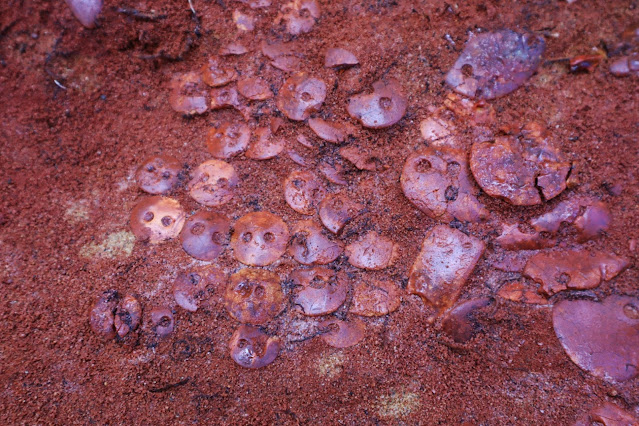
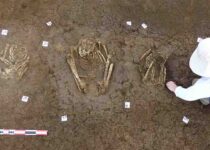
While investigating ancient encampments on the western shore of Lake Onega in the Republic of Karelia, northwestern Russia, the expedition discovered a burial site of a man with many amber ornaments and flint tools.
The man, clearly of high social standing, was buried in a narrow oval hole covered in ritual red paint – ochre.
During the clearing of the site, we have discovered around 140 amber ornaments of Baltic origin: buttons, pendants, discs.
Burials with this many amber ornaments have never been found in Karelia or the neighbouring northwestern regions before.
YOU MAY ALSO LIKE: Exquisite 2,000-year-old sapphire ring thought to have belonged to Roman Emperor Caligula
The amber buttons were placed in a row face down and were sown to the leather cover of the buried man. On the edges of the grave, the amber ornaments are so densely spaced that they form two tiers.

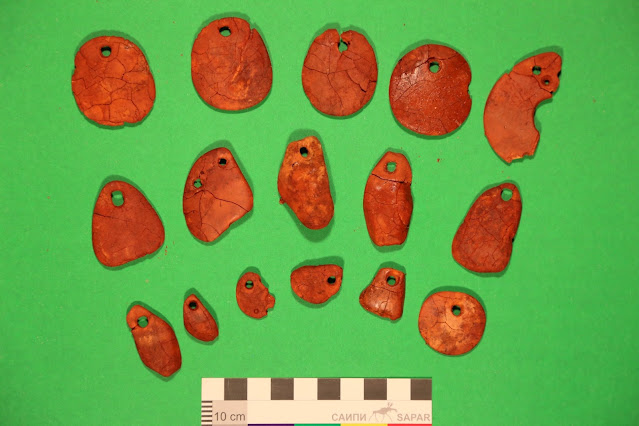
Some types of the amber ornaments found at the site have previously been discovered only in small quantities in the Eastern Baltic Sea region, and not in graves but on the sites of ancient encampments. Judging by the flint spearhead found nearby, a man, not a woman, was buried in the grave.
On closer inspection, we discovered the details of the unusual burial ritual: on top of the body, there are small flint chips of tools, so-called votive offerings symbolizing whole knives and spearheads.
There are no known flint sources in Karelia, so ancient people acquired tools made of it by the exchange. By analogy with similar amber ornaments found on encampments in the Eastern Baltic Sea Region, the discovered burial site is approximately 5500 years old.
Starting from the Mesolithic period, in the forest belt of Europe ancient people buried their dead in ancestral graveyards.
The burial site with rich grave goods found in the vicinity of Petrozavodsk is isolated. Besides, some of the discovered amber ornaments have not been found before in Eastern Europe.
It is possible that the buried man was a merchant from the Eastern Baltic Sea Region who had come to the western shore of Lake Onega to exchange amber for slate cutting tools.
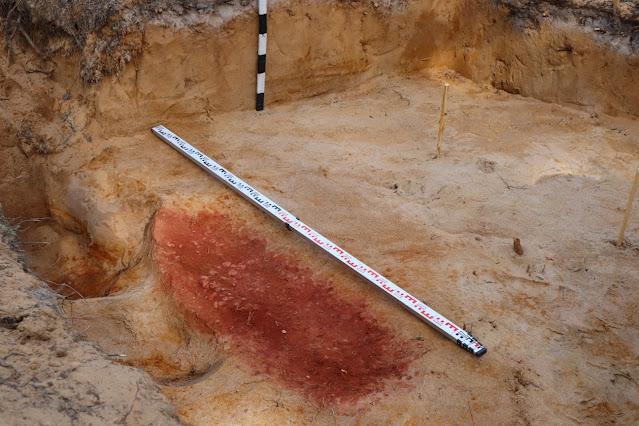
Workshops producing slate axes and adzes are currently being explored by the university exhibition right next to the burial site.
PetrSU exhibition’s discovery indicates that the ancient people living in Northern Europe had the so-called “prestige” primitive economy during which people made ornaments and valuable tools to support the high social standing of their owners.
YOU MAY ALSO LIKE: 370-year-old gold ring may have honored beheaded earl
Various ornaments and other prestige products amassed by distinguished hunters are now being found in burial sites.
The discovered “amber” burial site signifies strong relations between the ancient people of Karelia with the tribes of the southern shore of the Baltic Sea,” commented the discovery Aleksandr Zhulnikov.

Meet the ‘mold pigs,’ a new group of invertebrates from 30 million years ago
Tiye: One of the Most Influential Women of Ancient Egypt
Discovery Of 113 Ancient Taino Graves In Guadeloupe Sheds Light On A Lost People
About Author
