Bear Bone Pushes Back History Of Humans In Ireland By 2500 Years
Bear Bone Pushes Back History Of Humans In Ireland By 2500 Years
It was thought to have been an Arctic wasteland, inhospitable to humans until the glaciers of last Ice Age retreated, allowing humans to finally migrate across the landscape. But Ireland may have been home to hunter-gatherers more than 2,500 years earlier than previously believed, according to a new study that promises to rewrite the early history of the country.
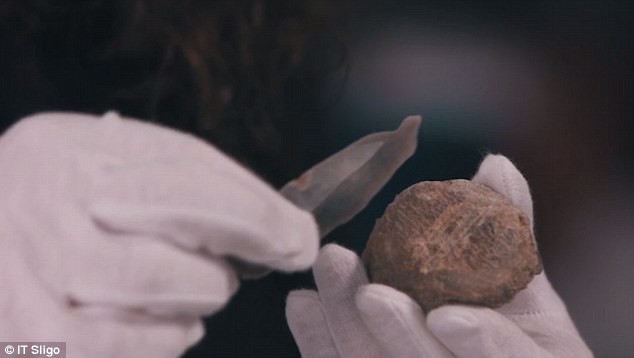
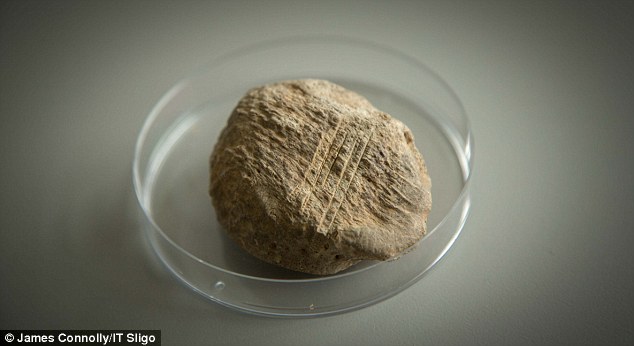
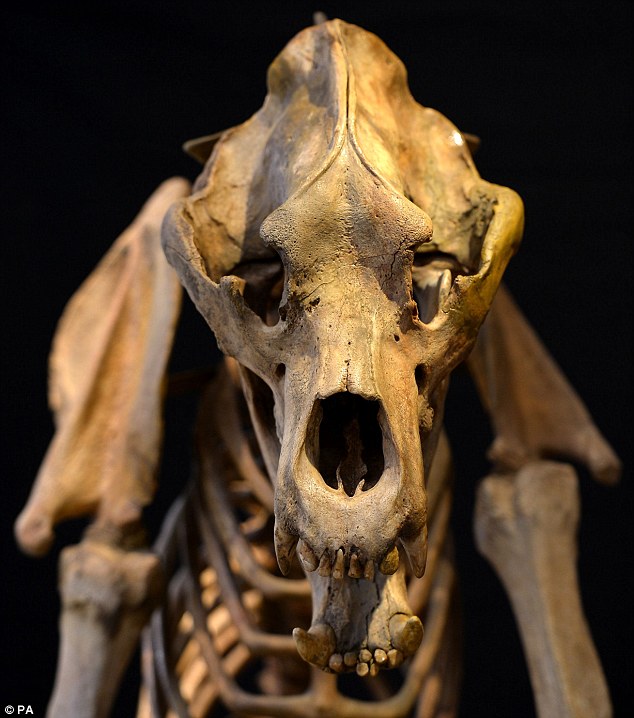
Archaeologists claim a knee bone of a cave bear butchered by prehistoric humans, found close to Ennis, County Clare in the Republic of Ireland, is around 12,500 years old.
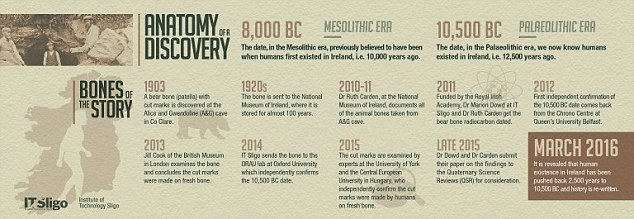
Scientists had previously thought the bear had died around 8,000BC, but new radiocarbon dating has shown it had been killed and butchered in 10,500BC.
It suggests human hunters have been living in Ireland just as the last Ice Age was coming to an end, and it provides a unique glimpse at the emerald isle’s earliest inhabitants.
Dr Marion Dowd, an archaeologist at the Institute of Technology Sligo in Ireland who led the work said: ‘This is a hugely significant and exciting discovery.
YOU MAY ALSO LIKE: Philippines Cave Art Becomes First Directly Dated In Southeast Asia
‘We’ve effectively pushed back the date of human occupation of the island of Ireland by two and a half thousand years.
‘Until now we knew that people have been here about 10,000 years ago but now we’ve pushed that back into earlier period into the Palaeolithic.
‘This find totally rewrites the human history of the island of Ireland.
‘It’s incredibly significant it’s really exciting it’s going to change the face of early prehistoric studies off this country.’
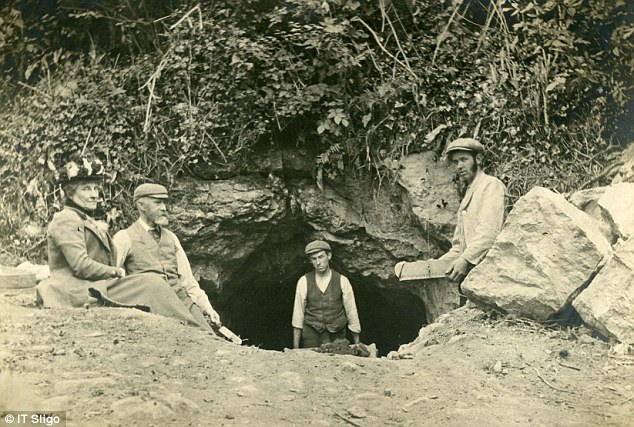
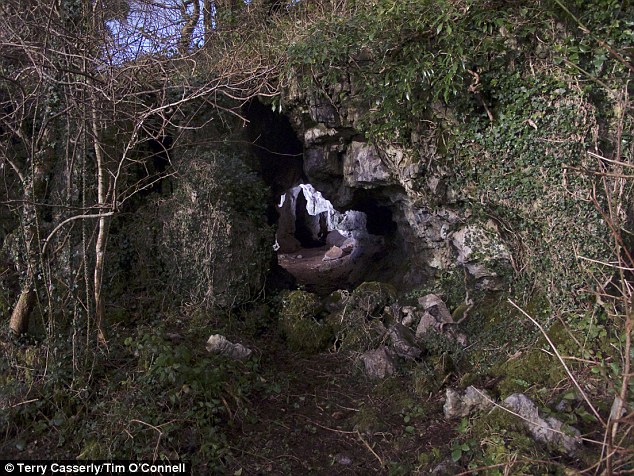
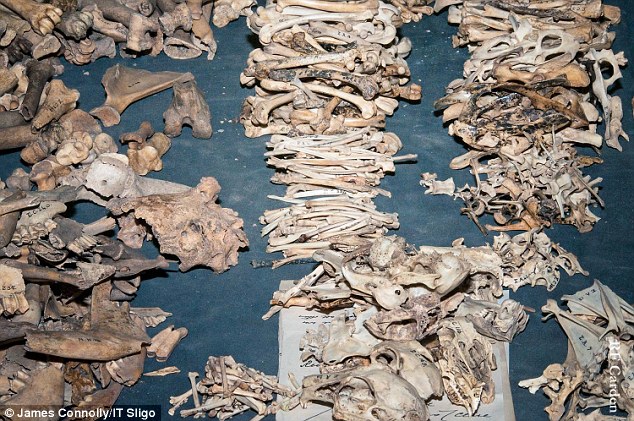
The cave bear patella, or knee bone, was discovered alongside thousands of other animal bones in a cave just outside the town of Ennis in 1903.
However, the archaeologists who discovered these had struggled to put a date to them and it was kept in storage at the National Museum of Ireland for more than 100 years.
Evidence from other sites, such as Mount Sandel in County Derry, suggested Ireland was only occupied from 8,000BC, firmly in the Mesolithic period.
Dr Dowd and her colleagues, including Dr Ruth Carden at the National Museum of Ireland, used modern radiocarbon dating to examine the knee bone.
Tests by both the Chrono Centre at Queen’s University Belfast and the University of Oxford showed the bone dated to 10,500BC.
Seven or eight cut marks on the bone suggested it had also been butchered using stone tools while the bone was still fresh, meaning humans must have been living in the area in the Palaeolithic.
Dr Dowd said: ‘The cut marks tell us of somebody butchering a bear carcass. They’re cutting through the knee area probably to pull out the tendons.
‘We’re also looking at somebody who seems to be inexperienced at this because you can see there seven or eight different lines, cut marks on the bone, so it seems that they’re having a little bit of difficulty cutting through this area.
‘The implement used would probably have been something like a long flint blade.’
‘The bone was in fresh condition meaning that people were carrying out activities in the immediate vicinity – possibly butchering a bear inside the cave or at the cave entrance.’
The discovery comes just three years after the firest Palaeolithic occupation of Scotland was uncovered.
Before this, humans were thought to have been mainly confined to southern parts of Britain.
But in 2013 a cache of flint tools was unearthed on the Isle of Islay that dated from the Palaeolithic.
YOU MAY ALSO LIKE: Archaeologists Baffled Over Preservation of 4000-Year-Old Danish Children’s Graveyard
Dr Carden, who also took part in the research on the cave bear bone, said: ‘From a zoological point of view, this is very exciting, since up to now we have not factored in a possible “human-dimension” when we are studying patterns of colonisation and local extinctions of species to Ireland.
‘This should generate a lot of discussion within the zoological research world and it’s time to start thinking outside the box…or even dismantling it entirely.’
Archaeologists Believe They’ve Unearthed Jesus’s Childhood Home
Spanish Divers Discover the World’s 108th Ancient Astrolabe
Stone Age Burial Garment Found In France Was Adorned With Shells And Deer Teeth
About Author