Haunting pictures show a mass grave of 113 ancient human remains buried in clay pots in China
Haunting pictures show a mass grave of 113 ancient human remains buried in clay pots in China
Archaeologists say the mysterious 2,000-year-old graves can help them understand more about the Western Han Dynasty
Archaeologists have discovered a group of 2,000-year-old tombs using a unique ancient burial method in central China.
A total of 113 human remains have been found and each of them was wrapped with two to three clay containers, reported the People’s Daily Online.
The group tombs are located in Huanghua City, northern China’s Hebei province, which was thought to be the site of an ancient city called Fudi.
Archaeologists discovered six tombs in May. The excavation efforts afterwards revealed that the site contained more than 100 chambers.
So far, experts have located 113 tombs.
All the remains were buried using a method called ‘urn burial’, which means the corpses were wrapped using two to three large clay containers, such as urns, pots and bowls.
A small hole would be drilled at a side of the clay coating. It’s believed that this was to let the soul of the deceased come and go freely.
It was previously thought that ‘urn burial’ was only used on children. However, on this newly discovered site, six tombs were of adults while 107 belonged to children.
Zhang Baogang, the head of the Huanghua Museum, told a reporter from China’s Xinhua New Agency: ‘Due to river digging and the destruction of nature in the past 2,000 years, we have only managed to excavate part of the tomb site.
‘We have discovered remains some 150 metres (492 miles) south of the site, which means the number of adults having been buried in urns could be much higher.’
YOU MAY ALSO LIKE: 8,500-Year-Old Human Teeth Used As Jewelry Discovered at Prehistoric Archaeological Site
This was the first time Chinese archaeologists had found ‘urn burial’ being used on adults, Zhang said during an earlier interview.
Zhang said that the tombs were thought to belong to civilians. As a result, the discovery was significant in helping them understand the burial customs of people living in Fudi, a fortress city built during the Western Han Dynasty (202BC-8)
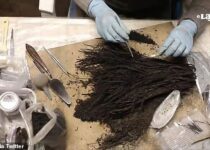
Nearly intact 1,800-year-old bouquets of flowers found in Teotihuacan

Pyramids Discovered Under Water Off Coast of Cuba, Might be Atlantis
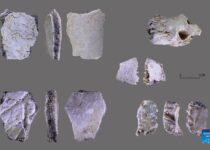
A 32,000-year-old skull discovered in central China is oldest known human fossil found in Henan province
About Author