
Line and hook fishing techniques in Epipaleolithic Israel
Line and hook fishing techniques in Epipaleolithic Israel
According to a new study by Tel-Hai College and international archaeologists, the ancient fisherman in Israel employed incredibly sophisticated technology.
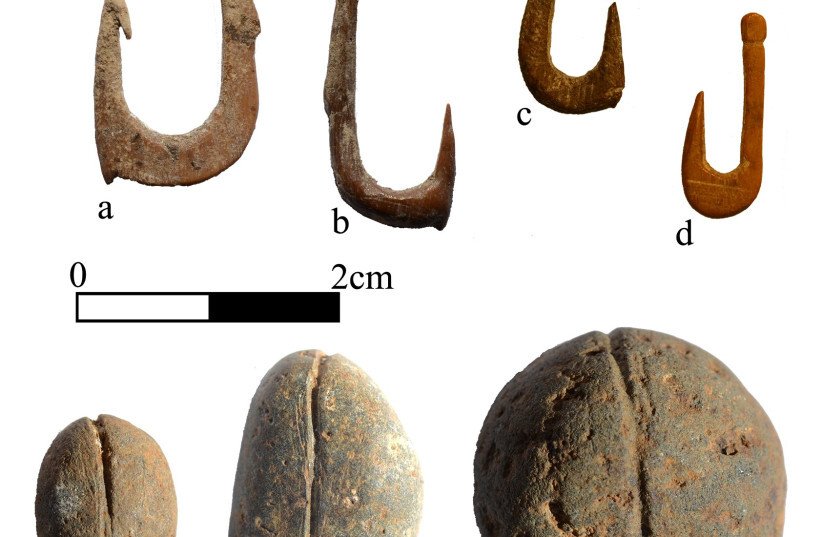
Some 13,000 years ago, prehistoric inhabitants of the Hula Valley went fly fishing in the Jordan River and employed incredibly sophisticated tools, the peer-reviewed scientific journal PLOS ONE reported Wednesday.
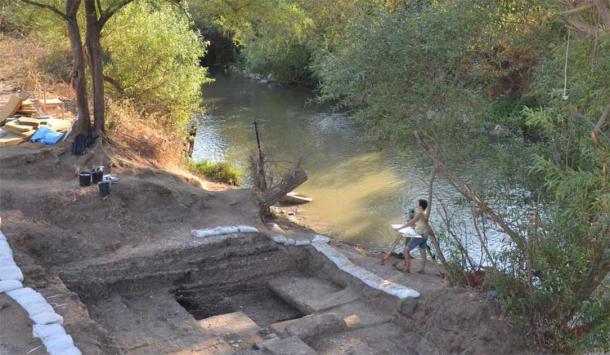
Researchers from Tel-Hai College in Galilee, the US, Italy and Germany employed a multidisciplinary approach to analyze artefacts and other remains collected at the Jordan River Dureijat site, including several bone fishhooks and six grooved stones.
The findings represent the world’s most ancient evidence for turning the hooks themselves into bait.
“Using the technique of three-dimensional scanning and high-magnification microscopes, we were able to reproduce the advanced technology through which the hooks were made,” said Prof. Gonen Sharon, lead author of the study and director of the master’s program in Galilee studies at Tel-Hai. “Each hook is a work of art in itself, and no two hooks are the same size.”
The Dureijat Epipaleolithic site was discovered following a drainage operation in the Hula Valley in 1999. It started to be visited by groups of hunter-gatherers 20,000 years ago and remained in use for about 10,000 years.
Among the artefacts found were limestone net sinkers. The ancient fishers also used plant materials to tie fine fishing lines and used resin as glue. Archaeologists found evidence of lures, the most ancient testimony of fly-fishing methods ever uncovered.
“The variety of size and types is amazing, and the technology expressed in their making is just incomparable,” Sharon said.
“Now we know that apart from using metal for the hooks and nylon for the line, modern fishing invented nothing.”
YOU MAY ALSO LIKE: In Jerusalem, a 2700-year-old private toilet from the First Temple era was unearthed
The archaeologists also uncovered a large number of fish bones at the site. The study of the bones, as well as of the teeth, showed that the fish was as long as two meters.
The rich environment likely helped the last hunter-gatherers transition to a sedentary lifestyle based on agriculture.





Massive section of Western Wall and Roman theater uncovered after 1,700 years
Faithful 8,400-year-old dog found buried with his master in Sweden

How a chunk of human brain survived intact for 2600 years
About Author
