
Mexican cave artifacts show earlier arrival of humans in North America
Mexican cave artifacts show earlier arrival of humans in North America
Artefacts from central Mexico cave are strong evidence humans lived on the continent 15,000 years earlier than previously thought.
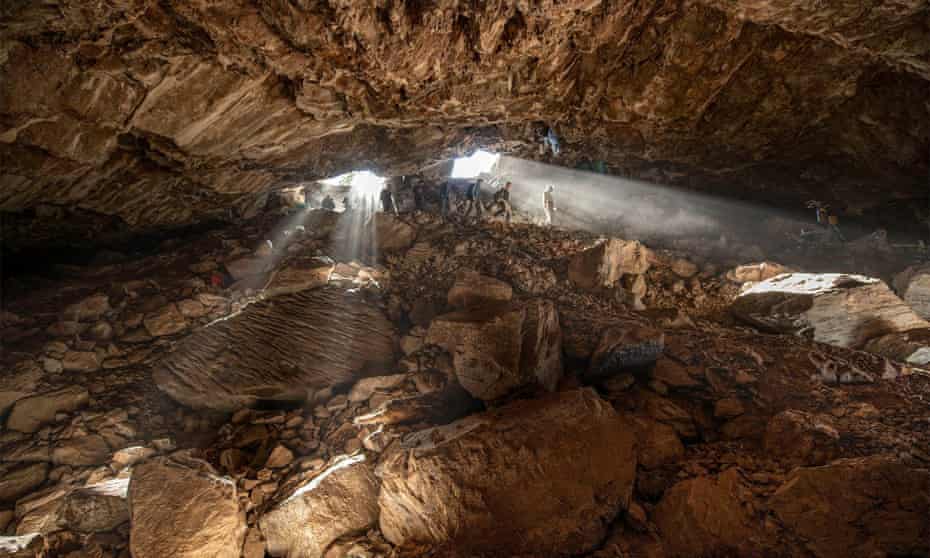
Tools excavated from a cave in central Mexico are strong evidence that humans were living in North America at least 30,000 years ago, some 15,000 years earlier than previously thought, scientists said on Wednesday.
The artefacts, including 1,900 stone tools, showed human occupation of the high-altitude Chiquihuite cave over a 20,000-year period, they reported in two studies published in the journal Nature.
“Our results provide new evidence for the antiquity of humans in the Americas,” Ciprian Ardelean, an archaeologist at the Universidad Autónoma de Zacatecas and the lead author of one of the studies, told AFP.
“There are only a few artefacts and a couple of dates from that range,” he said, referring to radiocarbon dating results putting the oldest samples at 33,000 to 31,000 years ago. “However, the presence is there.”
No traces of human bones or DNA were found at the site.
“It is likely that humans used this site on a relatively constant basis, perhaps in recurrent seasonal episodes part of larger migratory cycles,” the study concluded.
YOU MAY ALSO LIKE: How a chunk of human brain survived intact for 2600 years
The saga of how and when Homo sapiens arrived in the Americas – the last major landmass to be populated by our species – is fiercely debated among experts, and the new findings will probably be contested.
Until recently, the widely accepted storyline was that the first humans to set foot in the Americas crossed a land bridge from present-day Russia to Alaska some 13,5000 years ago and moved south through a corridor between two massive ice sheets.
Archaeological evidence – including uniquely crafted spear points used to slay mammoths and other prehistoric megafauna – suggested this founding population, known as Clovis culture, spread across North America, giving rise to distinct native American populations.
But the so-called Clovis-first model has fallen apart over the last two decades with the discovery of several ancient human settlements dating back two or three thousand years earlier.
In the second study published in Nature, evidence from 42 sites around North America indicated human presence dating to at least a time called the Last Glacial Maximum when ice sheets blanketed much of the continent, about 26,000 to 19,000 years ago and immediately thereafter.
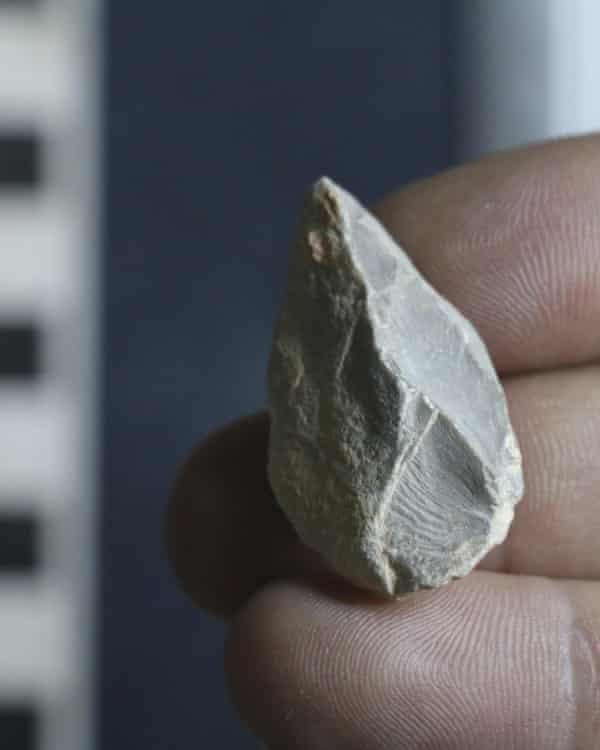
The findings suggest low numbers of people entered the continent earlier than previously understood – some perhaps by boat along a Pacific coastal route rather than crossing the land bridge – and some died out without leaving descendants.
“Clearly, people were in the Americas long before the development of Clovis technology in North America,” said Gruhn, an anthropology professor emerita at the University of Alberta, in comments on the new findings.
YOU MAY ALSO LIKE: World’s Oldest Map of the Stars Is Going on Display in the Uk
The archaeological scientist Lorena Becerra-Valdivia of the University of Oxford in England and the University of New South Wales in Australia – the lead author of the second article – said the continent’s populations then expanded significantly beginning around 14,700 years ago.
“These are paradigm-shifting results that shape our understanding of the initial dispersal of modern humans into the Americas,” Becerra-Valdivia added.


Vesuvius ancient eruption rescuer identified at Herculaneum, says, expert
5,500-Year-Old Burial Mound With Stone Circle Unearthed In Ukraine

Ancient bone sheds light on Slav alphabet history
About Author
