
Mystery of a man who died 1,300 years ago in China is SOLVED - and experts say it was murder
Mystery of a man who died 1,300 years ago in China is SOLVED - and experts say it was murder
A man was murdered in northwest China 1,300 years ago, and scientists now believe the murderers dumped the body in an ancient cemetery to cover up their tracks by ‘hiding a leaf in the forests.’
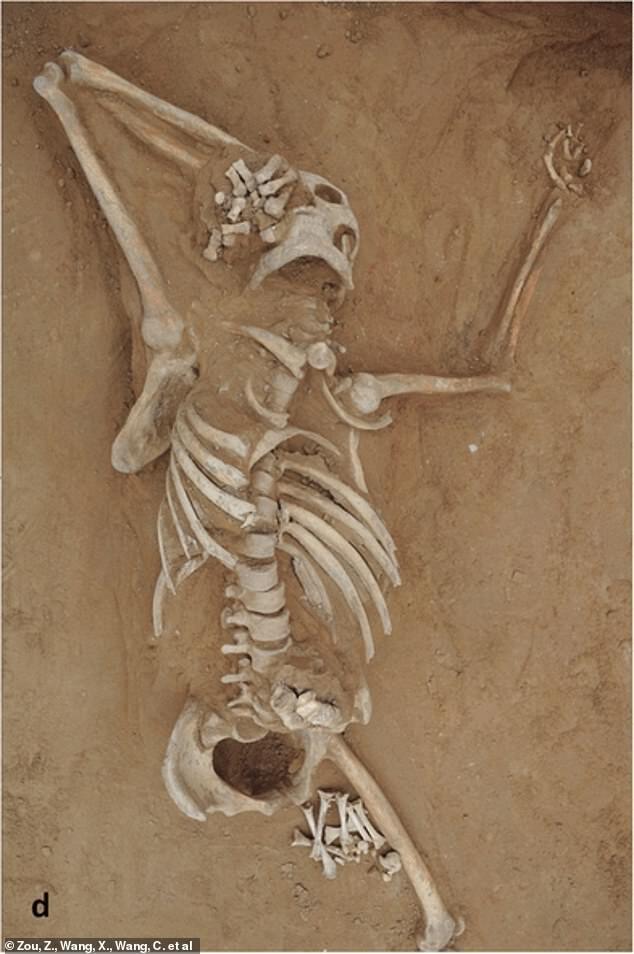
The young male was originally found in 2011when excavation began at Shiyanzi cemetery that had just been discovered a few years prior.
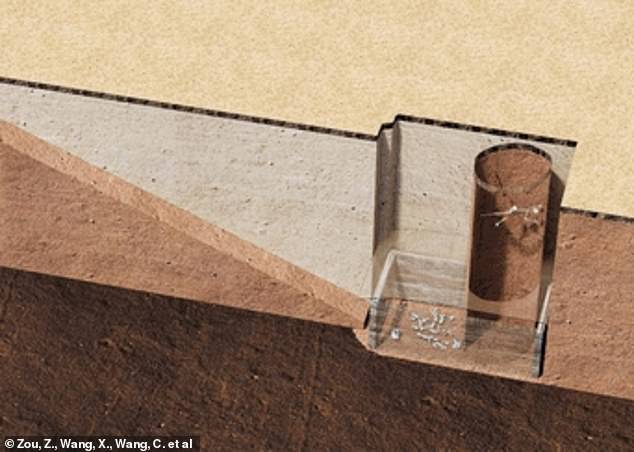
The victim’s skeleton was found inside a tomb shaft that led to the resting place of a family – a man, woman and child – and was initially thought to have been a grave robber who accidentally died while stealing goods from the grave.
A team of scientists, led by Texas A&M University, determined the remains sat 14 feet above the floor of the burial chamber, which suggests he died a significant time after there was a grave robbery.
Researchers also note that the man lived during the Tang dynasty, which hung or decapitated people found guilty of murder or assault leading to severe injury.
The Shiyanzi cemetery was discovered by construction workers working on a pipeline through the region of Ningxia in 2002, South China Morning Post reports.
YOU MAY ALSO LIKE: 900-year-old sword dating back to the Crusades found at the bottom of the Mediterranean Sea
Excavations of the graveyard, which was built 2,000 years ago during the Han Dynasty (206BC-220AD), began in 2009 and uncovered a total of 11 tombs.
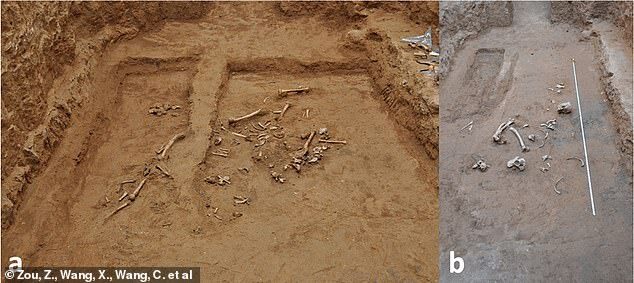
Archaeologists began unearthing remains in each tomb until they came across one with a skeleton stuck inside a shaft above the grave.
Following a deeper analysis, the three skeletons in the main area were found to be related, while the one in the shaft did not belong to this family and was also 700 years younger when he died - this was determined during a bone analysis.
It was previously speculated that the young male fell into the shaft while attempting to rob the grave, but as experts note, his body was nowhere near the area where grave goods sat.
Following the bone analysis that determined the date when the man died, the experts set out to learn how he may have met his demise 1,300 years ago.
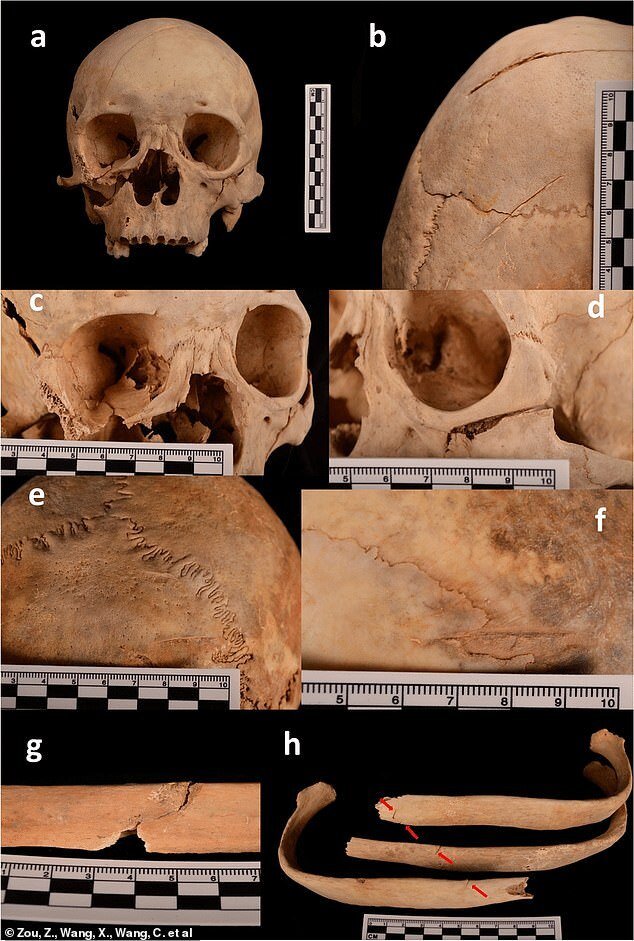
There were 13 ‘V-shaped sharp-force marks’ on the skeleton, with the worst located on the face - but experts say they were not deep enough to have killed the man.
What may have killed the man were stab wounds to his ribs that may have punctured vital organs like his heart or lungs.
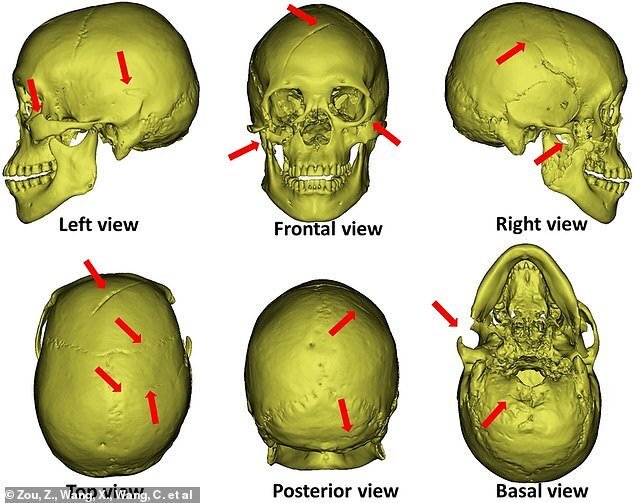

Researchers were able to paint a picture of the horrific event after seeing marks on the back of the head: these marks suggest the man was being attacked while he was turned away, which could suggest he was attempting to escape his captures.
Scientists believe the shaft was dug by the killers who then dropped the man’s body inside and filled up the hole before carrying on their way.
‘Through a reconstruction of the tomb and its relationship with the individual, it was believed that this individual was a victim of an assault,’ the study’s authors wrote.
YOU MAY ALSO LIKE: Archaeologists Discover 1,800-Year-Old Teotihuacan-Style Citadel in Tikal
‘After the assault, the victim was dumped in this shaft to purposely kept from sight. This case indicates that the strategy of hiding victims’ bodies in existing tombs or graveyards as a means of disposal, akin to ‘hiding a leaf in the forest,’ has been practiced since antiquity.’
The study was published in Archaeological and Anthropological Sciences.




Ancient humans in Europe may have stolen food from wild hunting dogs
Researchers sequenced the DNA 1,600-year-old sheep mummy from an ancient Iranian salt mine, Chehrabad

The 290 Million Year Old Fossil Human Footprint
About Author
