
World’s Oldest Map of the Stars Is Going on Display in the Uk
World’s Oldest Map of the Stars Is Going on Display in the Uk
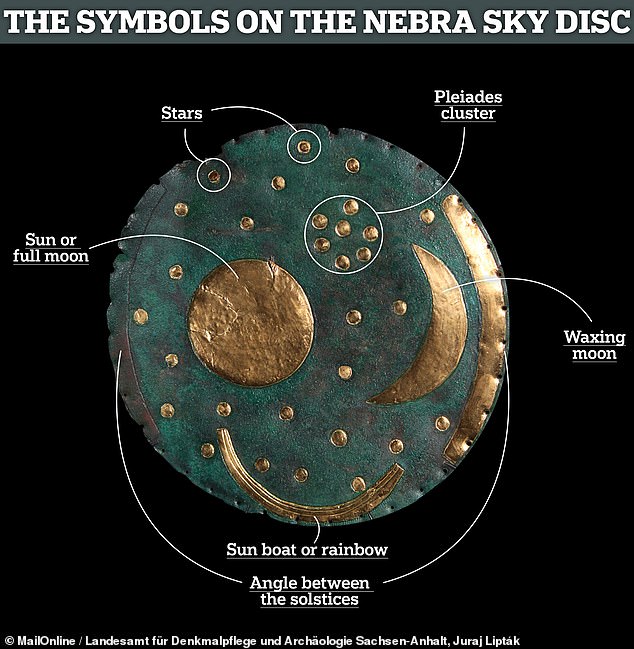
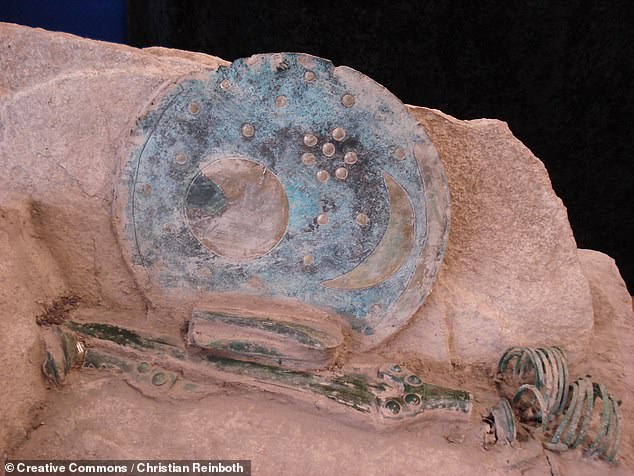
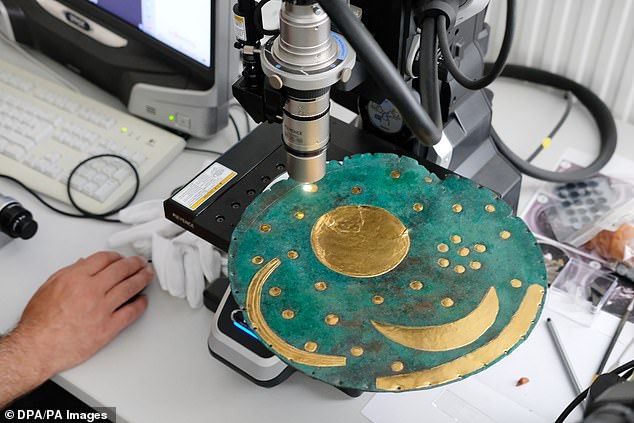
A remarkable 3,600-year-old Nebra Sky Disc, widely believed to be the world’s oldest map of the stars is to go on display at the British Museum. The 12-inch bronze disc sports a blue–green patina with inlaid gold symbols thought to represent the moon, sun, solstices and stars including the Pleiades cluster.
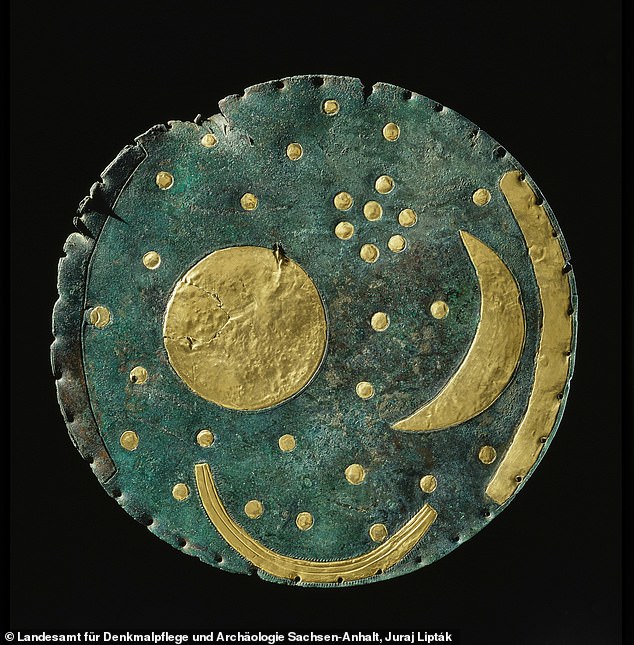
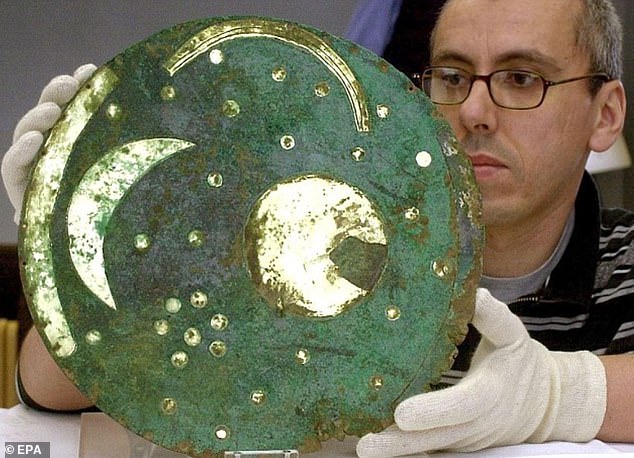
It was unearthed near the town of Nebra in Saxony–Anhalt, in the east of Germany, by looters Mario Renner and Henry Westphal back in 1999.
The pair were treasure hunting without a license, and destroyed parts of the archaeological site and damaged the disc with their spade.
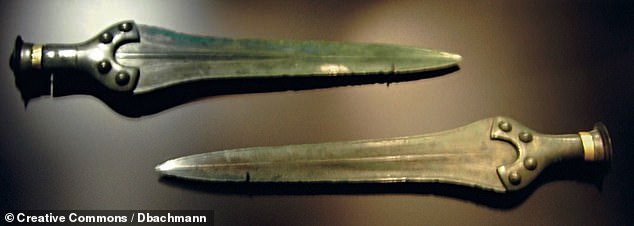
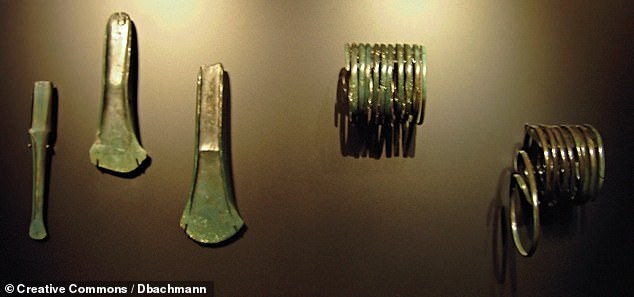
They sold the disc alongside bronze swords, hatchets, chisel and bracelet fragments found with it to a dealer in Cologne for 31,000 Deutsche Mark (around £10,000).
The artefacts traded hands a few times before they were finally seized on February 23, 2002, from museum worker Hildegard Burri-Bayer and teacher Reinhold Stieber.
YOU MAY ALSO LIKE: Scientists Find 890-million-year-old Fossil, Could be of Oldest Animal on Earth
The pair were arrested in the bar of the Hilton Hotel in Basel, Switzerland, after trying to sell the sky disc to the German state archaeologist for 700,000 DM (£217,391).
Experts believe the sky disc was used as a calculator to help its Bronze Age owners predict the best times for sowing and harvesting in the spring and autumn.
This interpretation is supported by the presence of a cluster of seven stars, the Pleiades, which appear next to a full or new moon at these times.
The disc’s age has led to a bitter feud between Bavarian State Archaeological Collection’s Rupert Gebhard and Tübingen University’s Ernst Pernicka.
Dr Pernicka cleaves to the conventional view that the disc was buried in 1,600 BCE — an assumption based on the age of a wood particle found on one of the swords.
However, Dr Gebhard and colleagues maintain instead that the design of the disc shares more in common with the totems of the Iron Age, 1,000 years later.
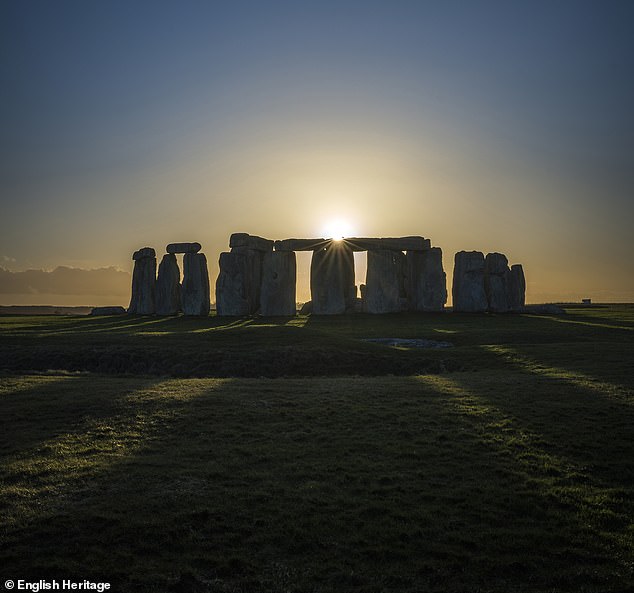
The Nebra Sky Disc will be one of the highlights of the ‘The World of Stonehenge‘ exhibition, which will feature hundreds of other artefacts from Britain and Europe.
One notable piece will be an extremely rare, 3,000-year-old sun pendant, which experts have called Britain’s most significant piece of Bronze Age gold.
‘The Nebra Sky Disc and the sun pendant are two of the most remarkable surviving objects from Bronze Age Europe,’ said British Museum curator Neil Wilkin.
‘Both have only recently been unearthed, literally, after remaining hidden in the ground for over three millennia.
‘We’re delighted that they will both be key pieces in our once-in-a-lifetime Stonehenge exhibition at the British Museum.
‘While both were found hundreds of miles from Stonehenge, we’ll be using them to shine a light on the vast interconnected world that existed around the ancient monument, spanning Britain, Ireland and mainland Europe.’
‘It’s going to be eye-opening,’ he concluded.
The Nebra Sky Disc is being loaned to the British Museum from the collections of the State Museum of Prehistory in Halle, in the east of Germany.
This is the first time in 15 years that the Bronze Age artefact has been loaned internationally and the UK will be only the fourth country that the disc has ever travelled to, after Denmark, Austria and Switzerland.
In 2013, the disc was added to the United Nations Educational, Scientific and Cultural Organization’s Memory of the World Programme, with experts calling the artefact ‘one of the most important archaeological finds of the twentieth century.’
The site where the disc was unearthed is a Bronze Age enclosure encircling the top of an 827 feet-tall elevation in the Ziegelroda Forest — 37 miles west of Leipzig — which is also known to contain some 1,000 barrows.
The Bronze Age sun pendant which will go on display alongside the sky disc was discovered buried in the peaty soils Shropshire Marches May 2018 by metal detectorist Bob Greenaway.
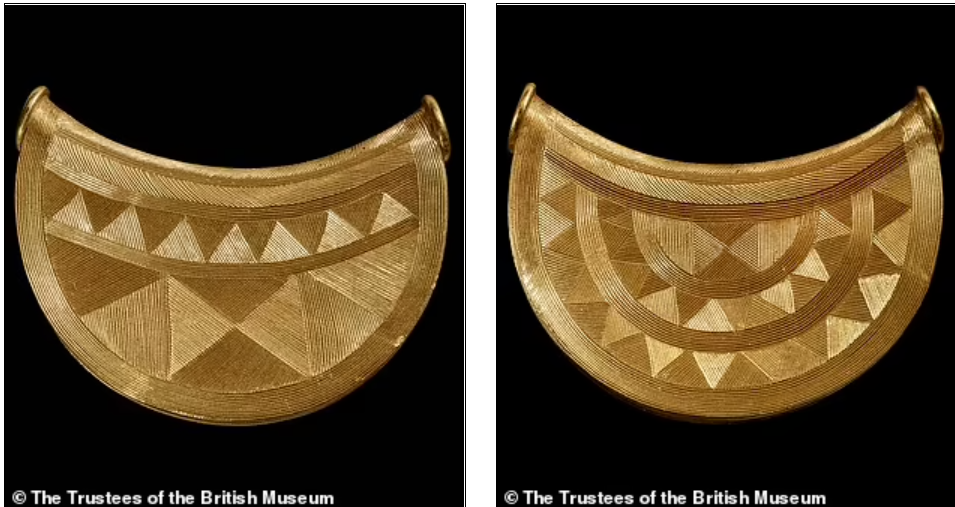
‘When I found it, my eyes nearly popped out of my head,’ Mr Greenaway said at the time of the discovery, at which point he had been metal detecting for 25 years.
The pendant measures some 1.9 inches across and 1.4 inches high and sports on one side a stylised representation of a sun.
Such iconography is a key element of Bronze Age cosmology and mythology across Europe but has very rarely been seen on objects found in Britain.
In fact, the pendant is only the second of its type known from the UK. The other, which has now been lost, was discovered near Manchester in 1722 but vanished sometime after 1806.
YOU MAY ALSO LIKE: Scientists Find World’s Oldest DNA In Tooth Of 800,000-Year-Old Cannibal
The Shropshire pendant was acquired by the British Museum last year for £250,000 and is presently being displayed at the Shrewsbury Museum & Art Gallery, near to where it was originally found.
‘The World of Stonehenge’ will open at the British Museum next year on February 17 and run until July 17, 2022, with tickets scheduled to go on sale in December.


Builders find Nazi bunker during underground carpark construction in Poland

‘Heart’ of medieval town revealed by building work
A New geological study shows that the great sphinx of Giza is 800,000 Years old
About Author
