
2,000-year-old Celtic hoard of gold ‘rainbow cups’ discovered in Germany
2,000-year-old Celtic hoard of gold ‘rainbow cups’ discovered in Germany
A Spectacular stash of ancient Celtic gold coins minted some 2,000 years ago have been found in Brandenburg, Germany.
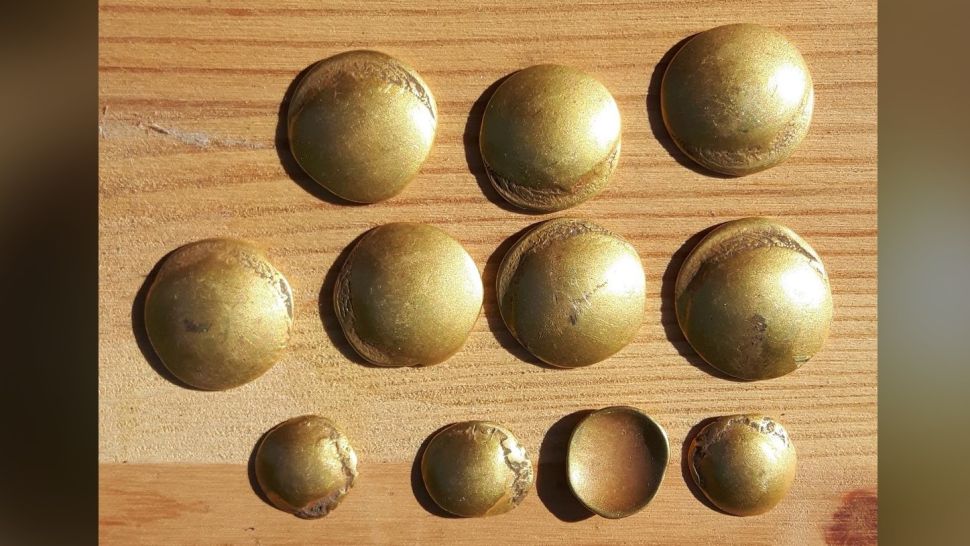
A volunteer archaeologist stumbled upon the stunning hoard, the value of which “must have been immense”. Manja Schüle, the Minister of Culture in Brandenburg announced in December 2021 that the 41 gold coins are the first known gold treasure to have been discovered in Brandenburg. The coins are curved, a feature that inspired the German name “regenbogenschüsselchen”. This translates to “rainbow cups”.
There is a Celtic myth that rainbow cups were found where a rainbow touched the Earth, just like the mythical concept that leprechauns can be found there with a pot of gold.
Marjanko Pilekić, is a numismatist and research assistant at the Coin Cabinet of the Schloss Friedenstein Gotha Foundation.
He said that another tale about the rainbow cups is that they “fell directly from the sky and were considered lucky charms and objects with a healing effect”.
YOU MAY ALSO LIKE: The human remains of 29 people buried as offerings in a pre-Inca temple were found at the Huaca Santa Rosa de Pucalá excavation site
Mr Pilekić also said that It’s likely peasants often found the ancient gold coins on their fields after rainfall, “freed from dirt and shining”.
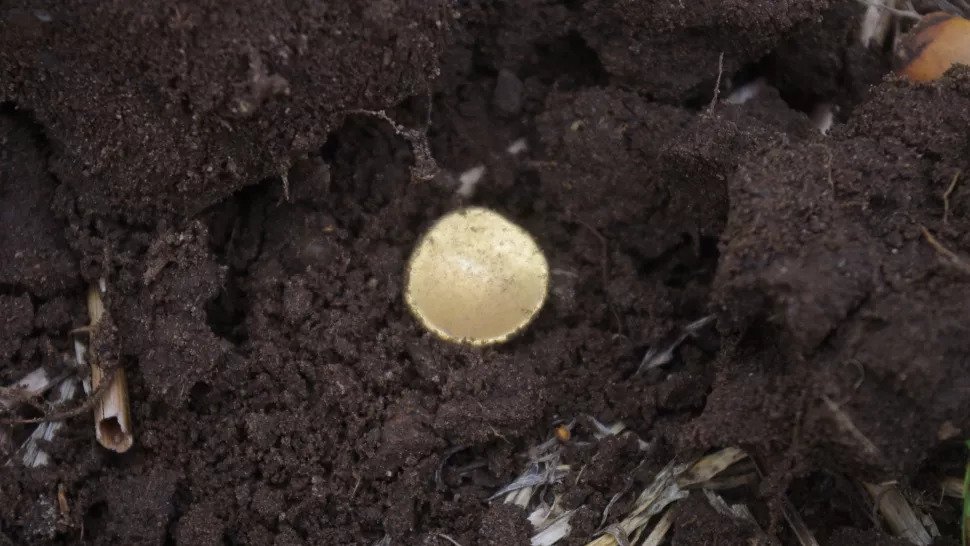
Wolfgang Herkt, was the volunteer archaeologist who discovered the hoard.
He was volunteering for the Brandenburg State Heritage Management and Archaeological State Museum (BLDAM) back in 2017.
When Mr Herkt got a landowner’s permission to search a local farm, he spotted something shiny and gold.
Mr Pilekić said: “It reminded him of a lid of a small liquor bottle.
“However, it was a Celtic gold coin.”
Mr Herkt reported his discovery to the BLDAM, having found 10 gold coins.
BLDAM archaeologists then brought the total up to 41 gold coins.
Mr Herkt said in a statement: “This is an exceptional find that you probably only make once in a lifetime.
“It’s a good feeling to be able to contribute to the research of the country’s history with such a find.”
Mr Pilekić was able to date the hoard’s minting to between 125 B.C. and 30 B.C., during the late Iron Age.
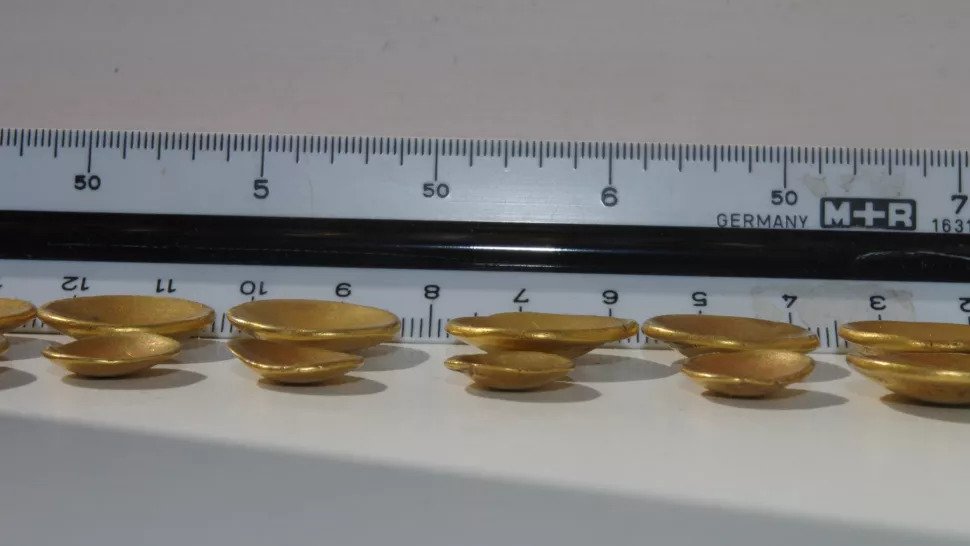
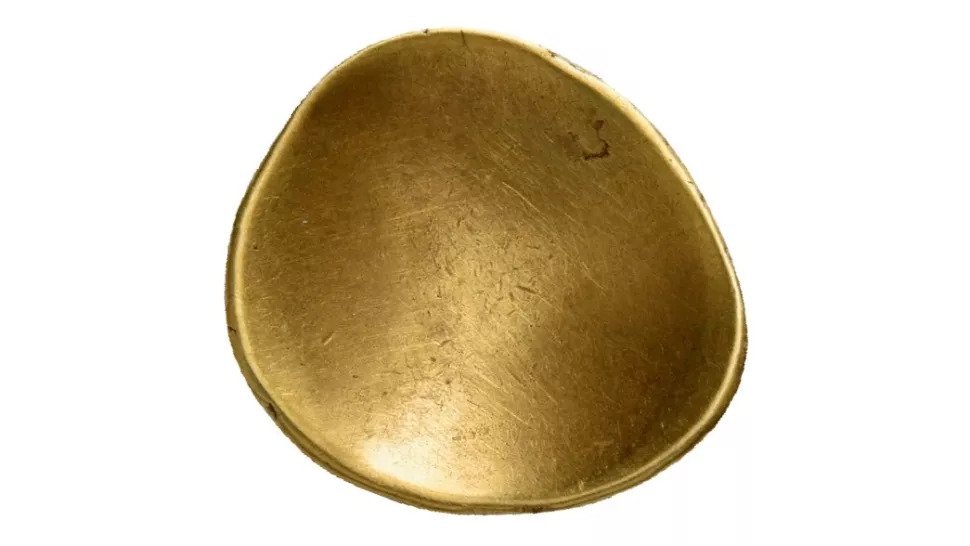
He did so by comparing the weight and size of the coins with those of other ancient “rainbow cups”.
During this time, the core areas of the Celtic archaeological culture of La Tène (about 450 B.C. to the Roman conquest in the first century B.C.) occupied a number of regions.
These include what is now England, France, Belgium, Switzerland, Austria, southern Germany and the Czech Republic.
Mr Pilekić said that in southern Germany, “we find large numbers of rainbow cups of this kind”. But the Celts did not live in Brandenburg.
That is why the discovery suggests that Iron Age Europe had extensive trade networks. Because the coins in the stash are similar, it’s likely that the hoard was deposited all at once
YOU MAY ALSO LIKE: Neolithic site could change understanding of what beef meant to ancient Irish
Mr Pilekić said: “It is rare to find gold in Brandenburg, but no one would have expected it to be ‘Celtic’ gold of all things.
“This find extends the distribution area of these coin types once again, and we will try to find out what this might tell us that we did not yet know or thought we knew.”

The Enigma of the Prehistoric with Bullet-Like Holes

Philippines Cave Art Becomes First Directly Dated In Southeast Asia

The Egyptian-German archaeological mission discovers parts of the facade of the temple of King Nectanebo I (photos)
About Author