
3,000-year-old clan cemetery uncovered in central China
3,000-year-old clan cemetery uncovered in central China
Archaeologists have found a 3,000-year-old cemetery in central China that contains the tombs of a wealthy clan after two years of excavation.
The site in Anyang, Henan province, is thought to have been home to a clan named “Ce” during the Shang dynasty, said the Anyang Institute of Cultural Relics and Archaeology in a news release on Thursday.
The clan cemetery was found just 1.5 miles (2.4 kilometers) from the ancient capital of Yinxu, where the ruins of a palace and ancestral temple are located.
The archaeological site contained 18 building foundations, 24 tombs, four-horse and chariot pits, and a number of remarkably intact relics, including jade and stone items, and bronzeware inscribed with the character “Ce.”
“In the oracle bone inscriptions, there is a record of the ‘Ce’ clan,” said Kong Deming, director of the institute, in the news release — referring to the earliest form of Chinese writing, in which characters were engraved on animal bones used in divination.
YOU MAY ALSO LIKE: Ancient coin mint discovered in China from over 2500-years-ago
“The ‘Ce’ clan emblem appears on many of the bronzes found at the … site this time, so we believe that the ‘Ce’ clan was active in this area.”
One of the site’s largest tombs appeared to have been robbed, with only a few objects, such as pottery pieces, uncovered.
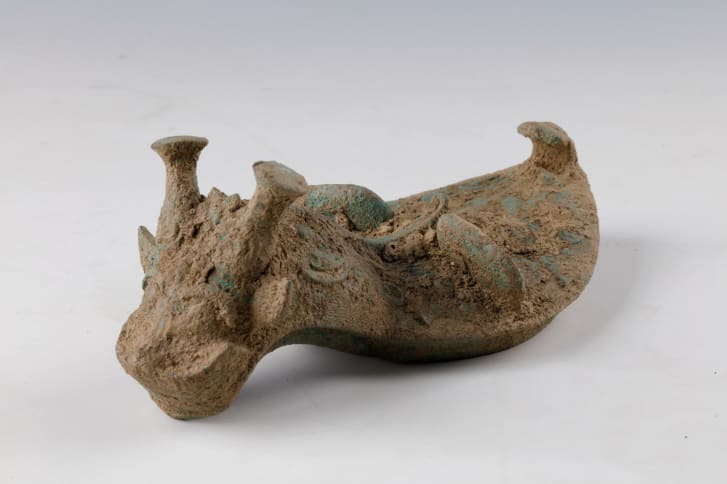
But in other pits, archaeologists discovered tools made from bones and clam shells, as well as over 20 sets of bronze ritual vessels like goblets, cauldrons and “jue,” which were used to serve warm wine during ceremonies.
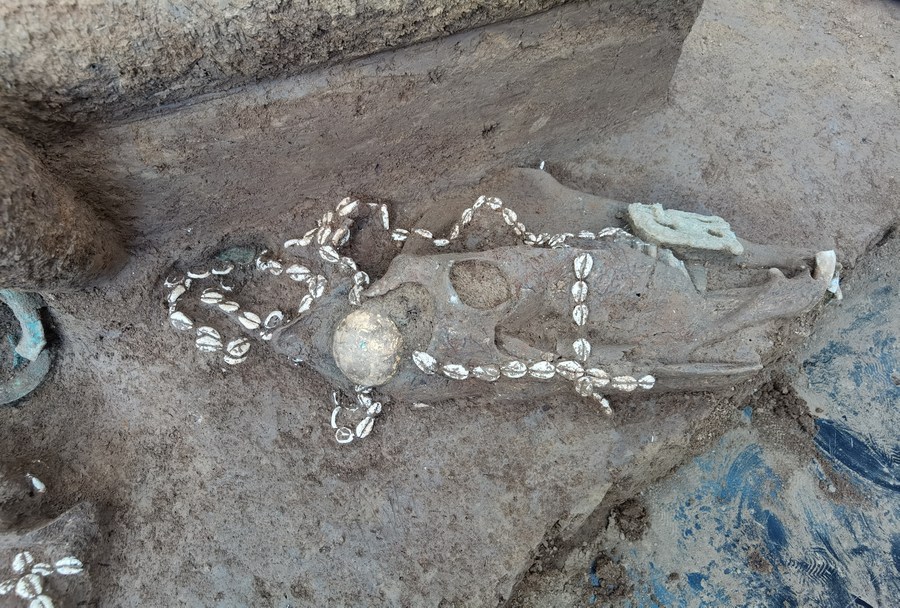
Archaeologists also uncovered six carriages, as well as the remains of several horses and people believed to have been buried alive with some of the entombed bodies — a common practice in the Shang dynasty, especially for those of high status such as royal family members.
Many of the remains bore lavish decorations, suggesting the clan was wealthy. Some of the buried people were found wearing hats with shell strings, while horses’ heads had been adorned with gold.
“This is very rare among the ancient discoveries of Anyang, reflecting the extraordinary status and power of the carriage owner,” said Kong, according to the state-run Xinhua news agency.
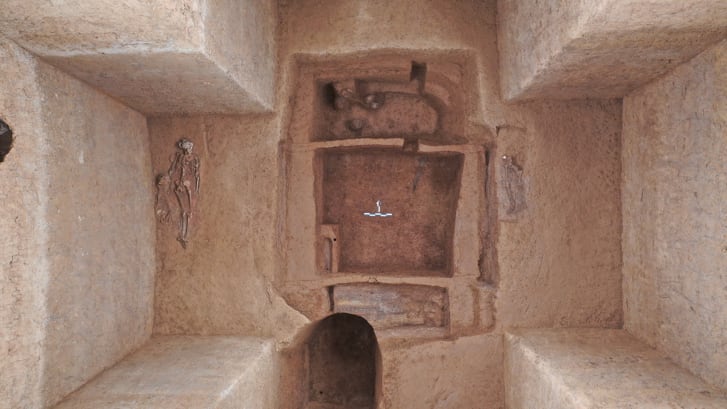
Other discoveries at the site — such as steps in front of a building’s foundation and the decorative remains of an inner wall — provide clues to how Shang dynasty houses were constructed and designed, Kong added.
YOU MAY ALSO LIKE: Human DNA Extracted From Nits on Ancient Mummies Sheds Light on South American Ancestry
Researchers believe the courtyards and tombs were built late into the dynasty, which ended in 1046 BC and ushered in China’s Bronze Age. The cemetery was likely restored and reused many times, but was abandoned after the Shang were overthrown.
Researchers are still trying to ascertain the “Ce” clan’s social status, how the community was structured and whether they had any relationship with the dynasty’s royal family.
HS2: Archaeologists discover ‘once-in-a-lifetime’ find of hundreds of rare Iron Age potins
A cartographer accidentally finds a Bronze Age treasure in a forest in Sweden
Peru: Mochica elite’s last woman unearthed in Lambayeque
About Author